A rider in his fifties came off a forty-mile Saturday loop on a well-fitted road bike with the outer two fingers of both hands numb, a numbness that took until Monday evening to clear and had been arriving earlier in the ride every month for a year. He had already done the sensible things: a professional fit, wider bars, thicker tape, three different pairs of gloves, a stem swap that brought the bars up almost two inches. The numbness moved around and came back. What finally ended it was not another component. It was sitting down, in a seat with a back, and taking his hands off the job of holding up his torso.
The four problems a reclined seat actually solves
On an upright bicycle the hands, the crotch and the neck are load-bearing structures, and every fit adjustment is really an argument about how to distribute weight among the three. A reclined seat ends the argument by moving all of it onto a surface built for it, the back and the buttocks, which is why the four classic complaints tend to vanish at once rather than improve slightly. Wrist and ulnar nerve numbness goes because the hands carry nothing. Saddle pressure goes because there is no saddle. Neck ache goes because the head sits where it naturally sits, looking forward, not craned up from a folded torso.
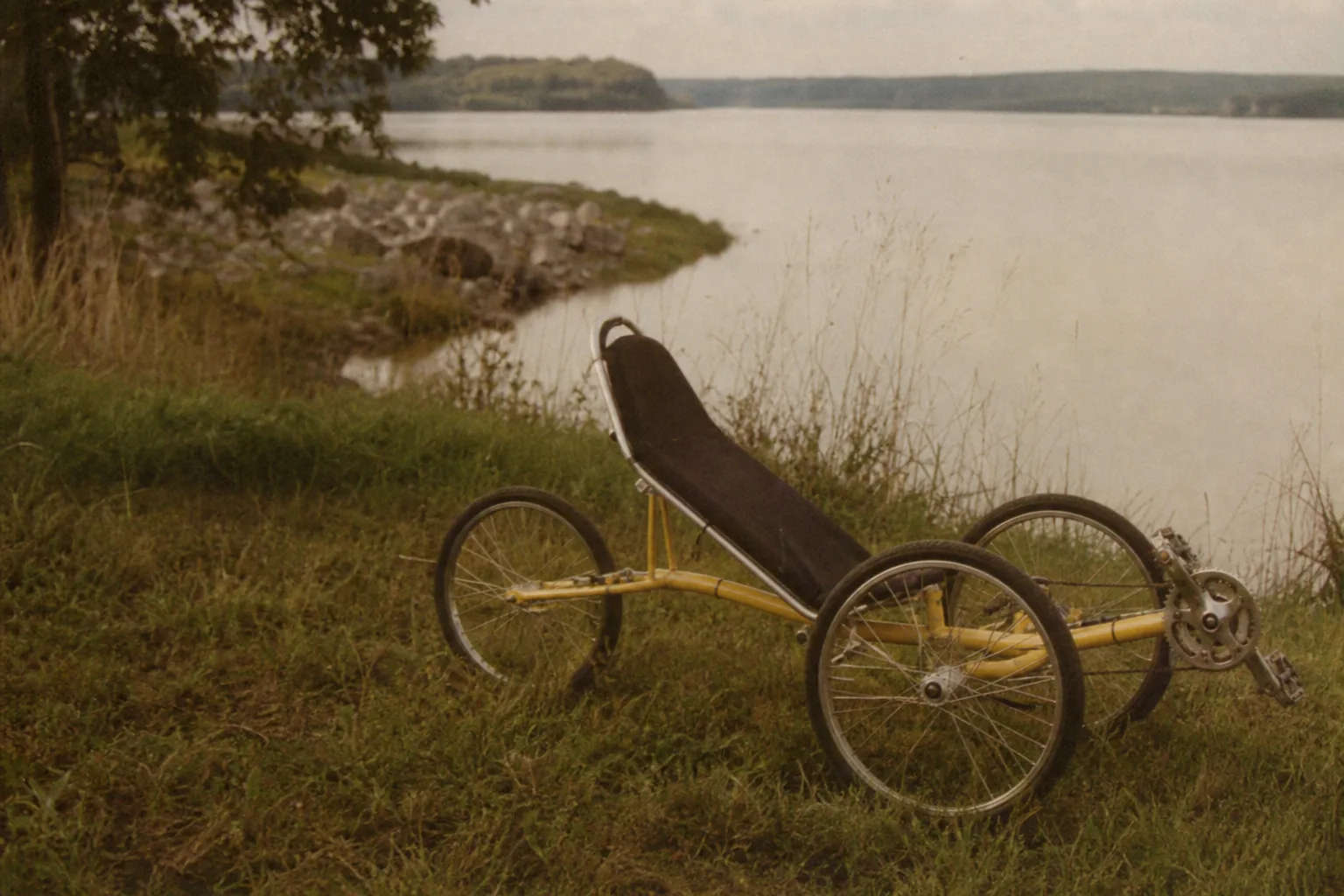
Balance is the fourth, and it is the one that sends most people looking in the first place. A rider with an inner ear condition, a knee that occasionally refuses a foot-down stop, or simply seventy-eight years and a bad memory of a driveway fall does not want better balance training. He wants a machine that does not require balancing, and a three-wheeled tadpole layout supplies exactly that, standing still at a red light with the rider's feet still clipped in. The Consumer Product Safety Commission oversees bicycle safety standards in the United States, and trikes sold here are built to the same equipment expectations as any other bicycle.
What it charges you on a climb
The bill arrives at the bottom of the first real hill. Standing on the pedals is not available, so every watt has to come from seated leg drive against the seat back, and a rider who is used to changing muscle groups by getting out of the saddle will find that option simply gone. The compensation is a gear range low enough that cadence never collapses, which most factory builds supply and most owners extend anyway. Expect to arrive at the top slower than you would have on the upright, and to arrive without the accumulated hand, neck and crotch damage that was the reason for the change.
There is a second compensation, and it is worth being honest about how often it decides the question. A rider who wants the reclined seat but does not want to give up his familiar climbing pace usually ends up shopping for an electric recumbent trike, where a mid-drive or hub motor covers precisely the gap the missing standing position left. That combination, a seat that removes the pain and a motor that removes the climbing penalty, is why a large share of people who make the switch late in their riding lives make it to an assisted machine rather than an unassisted one.
Low speed, tight spaces, and where the thing lives
The other costs are geometric and they show up in the first week, not the first year. A tadpole trike is roughly thirty inches across the front track and eight feet long, which means the sidewalk cut-through you have used for a decade may not accept it, the bike rack outside the library certainly will not, and a U-turn on a residential street becomes a three-point maneuver. Two-wheeled recumbents keep the narrow track but ask for a genuine learning period at walking pace, because the steering inputs at under four miles an hour feel wrong for the first several rides. Both problems solve with route habits and practice.
Storage is the cost people underestimate most reliably. A garage that comfortably held two uprights on wall hooks will hold one trike on the floor, occupying the footprint of a small motorcycle, and the machine cannot be hung, stood on end, or leaned in a corner. Folding models exist and they work, though folding one after every ride is a chore few owners keep up for long. The rider who buys a trike and then has nowhere sensible to put it usually resolves it by clearing a dedicated corner and accepting the trade, which is a fair one.
The rider who tries one and goes back
Some people ride a recumbent for a season and return to upright, and the pattern in who they are is consistent enough to be useful. They are riders with no pain problem to solve, who ride mainly in groups, who value being in the pack and matching its pace on rolling terrain, and who find that the reclined machine puts them off the back on every rise. They are also riders whose routes involve constant tight turns, dismounts, and locking up at ordinary racks. If your hands are fine and your neck is fine and your Saturday is social, the reclined seat is offering you a solution to a problem you do not have.
Everyone else should test ride before deciding, on a hill, at walking pace, and in the parking lot where the thing would actually be locked.