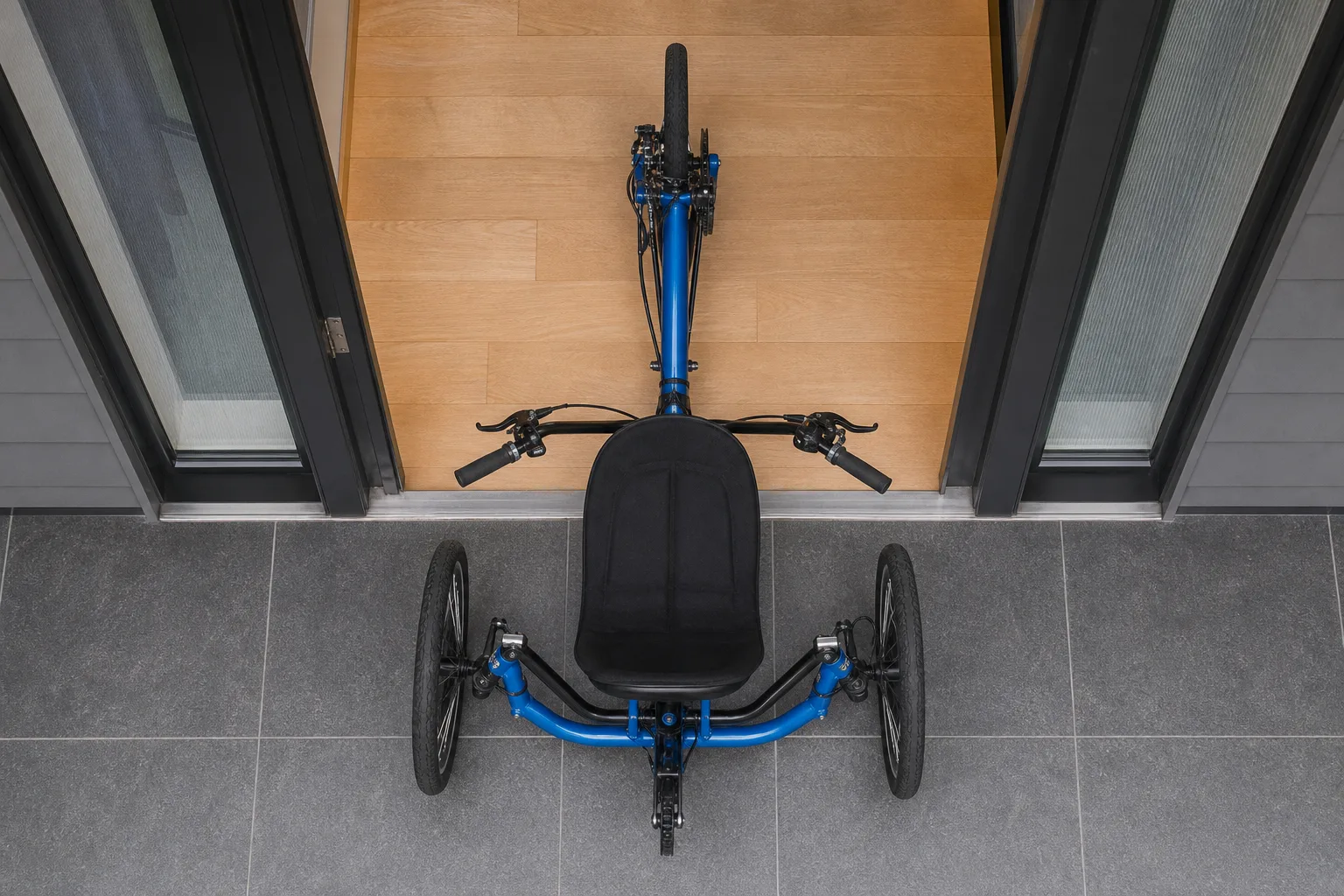
A rider in Ohio bought a tadpole trike sight unseen from a listing three states away, drove out with a borrowed pickup, and got it home in ninety minutes. The problem started in his own driveway. The machine measured a shade over nine feet nose to tail with the seat reclined and the rear rack fitted, and the side door of his detached garage was a standard 32-inch opening with a step down and a workbench three feet inside. The trike was 31 inches across the front axle. It fit through the door. It did not fit through the door and then turn.
1. Measure the opening, then measure the turn behind it
Track width is the number every manufacturer publishes, and it is the number that misleads people, because almost every trike sold in the last decade will clear a residential door with an inch or two spare. What stops the machine is what happens after the threshold: a step, a water heater, a shelf bracket, a doorway that opens into a hallway rather than a room. A careful buyer walks the whole route with a tape measure and a cardboard rectangle cut to the trike's footprint, and finds the pinch point before the money moves rather than after.
2. Take-apart frames earn their price in a specific way
A take-apart or folding frame is not primarily about travel. It is about the difference between a machine you store on end against a basement wall in a footprint the size of a card table and a machine that occupies a full parking bay. Folding trikes typically hinge the frame behind the seat and drop the overall length by roughly a third; take-apart designs split the frame at a coupling and separate into two pieces one person can carry. Both cost money and add a little weight. Both also decide whether the trike gets ridden in February.
3. The hitch rack question is answered by the receiver, not the rack
Trike racks are heavy, and a loaded trike on a platform sits well behind the bumper, which multiplies leverage on the receiver. Class I receivers are common on small crossovers and are rated conservatively; a Class II or III receiver gives the tongue weight headroom that a 45-pound trike plus a 35-pound rack actually needs. Check the vehicle's rated tongue weight in the owner's manual, not the rack's marketing copy, and check whether the platform blocks the license plate or the rear camera, because both are enforcement matters in most states.
4. What actually fits in a hatchback
A folded or take-apart trike goes inside a midsize hatchback with the rear seats down, and this is the single change that turns a trike from a garage-bound object into something you take to a rail trail on a Saturday. The measurements that matter are the height of the load opening, the width between the wheel wells, and the length from the tailgate to the back of the front seats. Owners who load regularly keep a moving blanket and a short ratchet strap in the car, and the whole operation takes about four minutes once the sequence is learned.
5. Sitting at bumper height, and what visibility gear changes
A seated recumbent rider's head sits somewhere near the beltline of a pickup, which changes not whether drivers see you but when. A flag on a fiberglass pole puts a moving object at roughly six feet, above roof height for sedans, and it works best at intersections where a driver is scanning above the hood line. A mirror, ideally a pair, gives you the information that lets you hold your line instead of turning your whole torso. Daytime running lights, especially a bright flashing front unit, are the piece riders report changing left-turn behavior most. The Consumer Product Safety Commission is the federal body responsible for bicycle reflector and equipment requirements, and its rules cover trikes as bicycles.
The rider in Ohio kept the trike. He took the workbench out, widened the garage door opening to 36 inches for about the cost of a decent wheelset, and now stores it nose-in with the flag pole unclipped. The regret was not the machine. It was measuring it after buying it, when every one of those numbers was published and free to check a week earlier.